A Prince in Yerres, a character to know better
Ferenc II Rákóczi
By Gilles Baumont
|
[

This document is also available in PDF format, 9 pages, 1 216 Kbytes]
In
Yerres1, the Hungarian authorities commemorate every year in September their national hero, Prince
Ferenc II Rákóczi, who retired to the Camaldolese convent, located on the territory of this municipality. Known for having led the war of independence against Habsburg Austria in 1703, he is indeed the warlord who receives the honors, as he demonstrated his determination and courage, following the family heritage…
However, do we really know the man he was?
Recent work by Hungarian researchers has made it possible to rediscover and make known aspects of the life of this prince and his writings that have been little studied until now - in particular, a seminar organized in Budapest in May
20222, which brought together nearly twenty specialists, around Gabor
Tüskés3. Their communications revealed in particular the scholar that Rákóczi was, through research on Jansenist currents and their diffusion in European literature.
But the source that allows us to approach the complex personality of the Prince more intimately is the recent publication of a critical edition of the
Confessio peccatoris, written in Latin by Rákóczi
himself4. This scholarly work provides a body of information and food for thought on aspects of his life that may echo contemporary difficulties, as well as universal questions.
This text of more than 400 pages, in which Rákóczi himself tells in detail all the periods of his life and his moods, is a rarity. Without pretending to summarize in a few words such a considerable work, it is necessary to recall first of all the historical course of the prince, who marked with his passage the small village of Yerres.
The Prince in History
Born on March 27, 1676 in
Borsi (now in Slovakia), he died in Rodosto (now
Tekirdağ in Turkey) on April 8, 1735 (Good Friday!). Prince of Transylvania, a region of part of Hungary, Ferenc (Francis) Rákóczi was the heir of a wealthy family of the Hungarian nobility, which associated its destiny with a very long tradition of autonomy against the powers, especially the house of Austria, causing ancestral wars, against the background of deep religious and territorial quarrels. Uprisings were organized by the lineage of this family, from his great-grandfather
George I, to his mother Helen Zrinyi. This history is well documented by diplomatic archives and by studies already published in the 19th and 20th centuries.
The prince reminds us of historical facts: since the year 1000, Pope
Sylvestre II, by crowning the first Christian king of Hungary,
St. Stephen, protected the kingdom of Hungary from the claims of the Germanic sovereigns. The
Golden Bul of
Andrew II, which in 1222 authorized armed resistance and legalized noble revolts, was abolished by the
Diet of Presburg in 1687. The Empire pursued a very repressive policy in these territories, provoking numerous revolts of the
kurucs (the crusaders or malcontents, names given to the Hungarian insurgents during previous revolts). Thus,
"the revolt led by Prince Ferenc II Rákóczi from 1703 to 1711 is part of a long line of conflicts between the Hungarian people and the Habsburg dynasty5."
But events and reversals of alliances put an end to his military action, which he saw as a failure. He arrived in France in 1713, and received help from Louis XIV, who had previously supported the Hungarian cause. He received protection and subsistence. Rákóczi was then very close to the court and witnessed the agony of the king. The death of the king on September 1, 1715 was a significant event in his life. His exile to
"convent of Camaldolese at Grosbois" took on a special meaning.
|
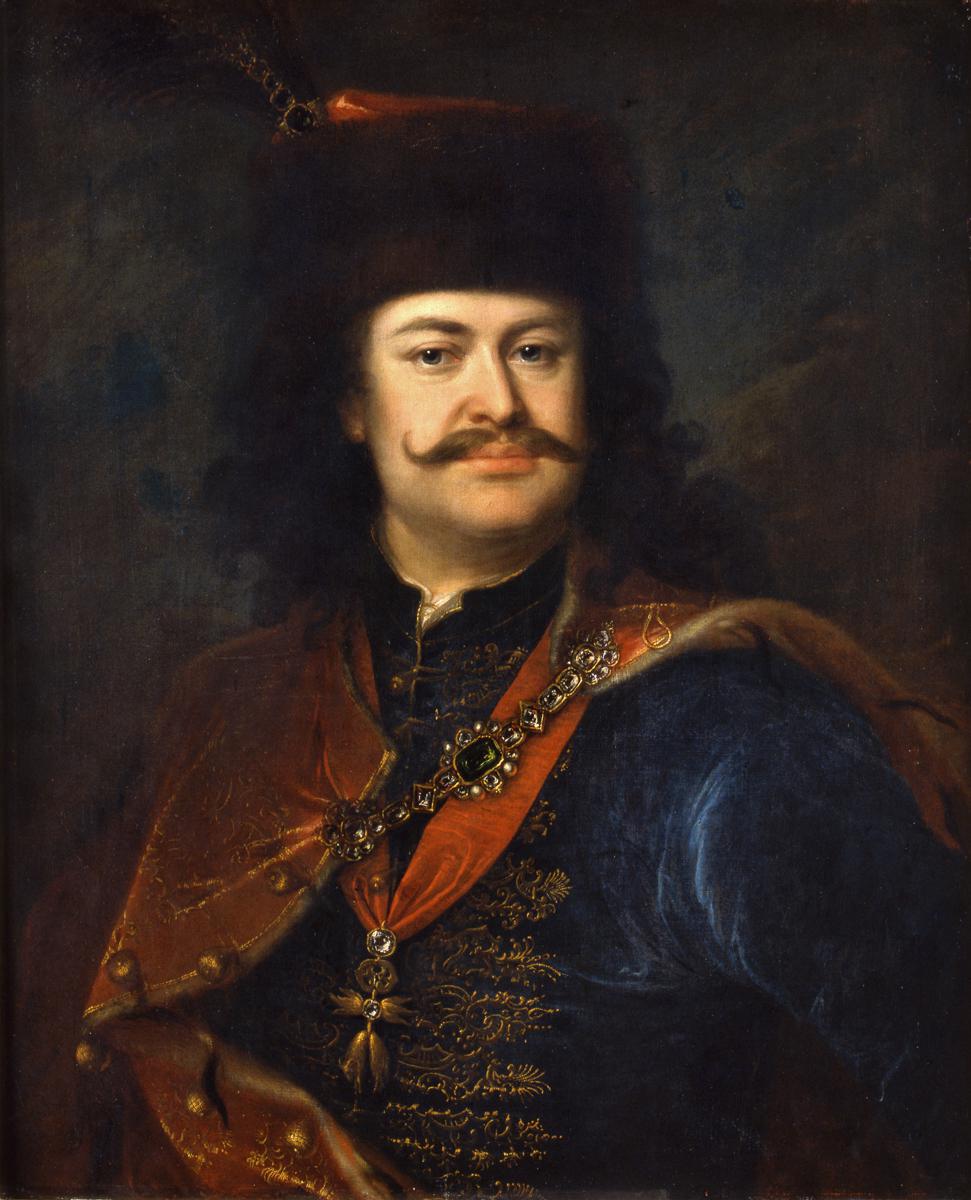
Portrait of Prince Rákóczi
Ádam Mányoki 1712
© Museum of Fine Arts, Budapest (invent. 6001)
|
Ferenc received his first education in 1688 at the Jesuit College in
Neuhaus (now in the Czech Republic), and then "did" his humanities in Prague. In the
Confessio…, he is very critical of the Jesuit fathers, whose teaching and behavior he considers too lenient; the numerous comments of the prince show how he formed his religious thought precisely against this teaching. Moreover, he denounced their bad intentions and manipulations,
"their insincere procedures", affecting his family.
"The Jesuits are the despoilers of the will of the Fathers; I often pretended to be in the feelings of these miscreants."
He describes the beginnings of his life as a child, then as a Prince, as a continual plot against him, when he is not exposed to the adversity of accidents on land or sea. It is true that his journey as a man of war proved to be very risky, with adventures whose anecdotes sometimes contributed to the creation of his novelistic character.
The
Confessio… contains very instructive information about his moral formation, which echoes St. Augustine and foreshadows Jean-Jacques Rousseau.
He tells the episode of the theft of objects, with which he reproaches himself, by specifying:
"besides it was not in the larceny that I found my pleasure, but in the stolen thing"; curious resemblances, by the explanations and subtleties of the consciences battling with the culpability: Jean-Jacques Rousseau’s remorse in the episode of the stolen ribbon; the theft of pears by St. Augustine, who confesses:
"and it is not of the object coveted by my larceny, but of the larceny itself and of the siń that I wanted to enjoy". St. Augustine, also the author of
Confessions,would be the perfect model for Rákóczi. The paths of the two men, from the most unbridled life to extreme devotion, have amazing similarities.
Grosbois
A place surrounded by forests, overlooking the valleys of the Yerres and its tributary the Réveillon. Today, few of the conventual buildings remain, but the district has retained its charm, its fresh air and its water sources, despite the progressive urbanization along the 20th century. This is Grosbois, a place to which Rákóczi, more than once, tells his attachment.
The history of the Camaldolese in Yerres has been well described in the book by Lucia
Laporte6, in which the presence of Prince Rákóczi is perfectly documented. Despite the contradictory information of various chroniclers, such as Saint-Simon or Dangeau, we can affirm today that Rákóczi, while participating in the religious life among the monks, remained the Prince accompanied by a retinue, even if limited, as the archives of Yerres attest; It is certain that he remained informed about diplomatic events involving the great powers, from the Habsburg Empire to Sweden and England, from France to Spain, from Russia to the Porte (Turkey).
Rákóczi, despite his retirement to Yerres, had not given up the defense of his homeland.
| |
|
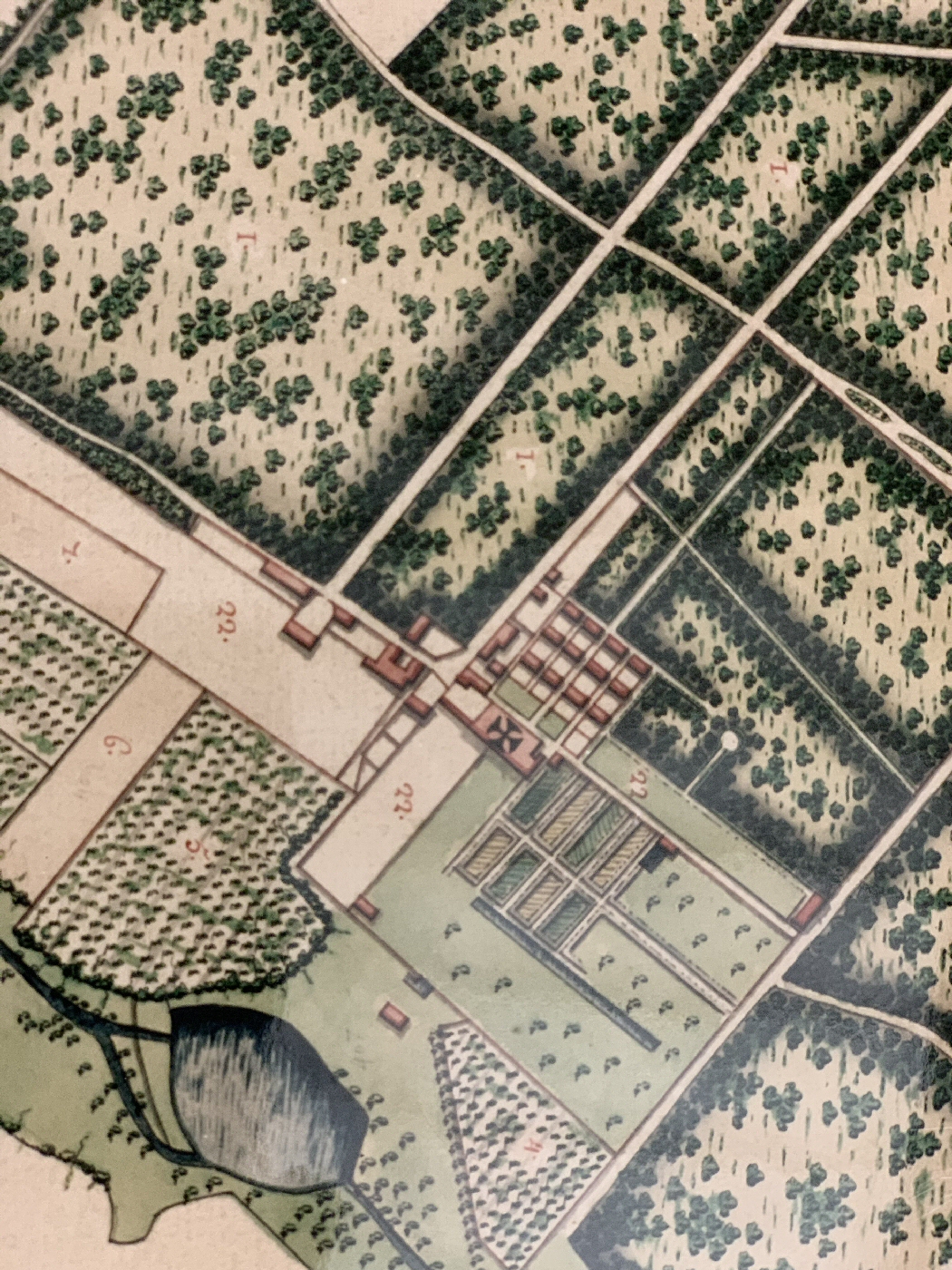
Plan of the Berthier Atlas 1718
Archives nationales: Cote 173bis, AP116bis
The monks' cells are clearly visible
| |
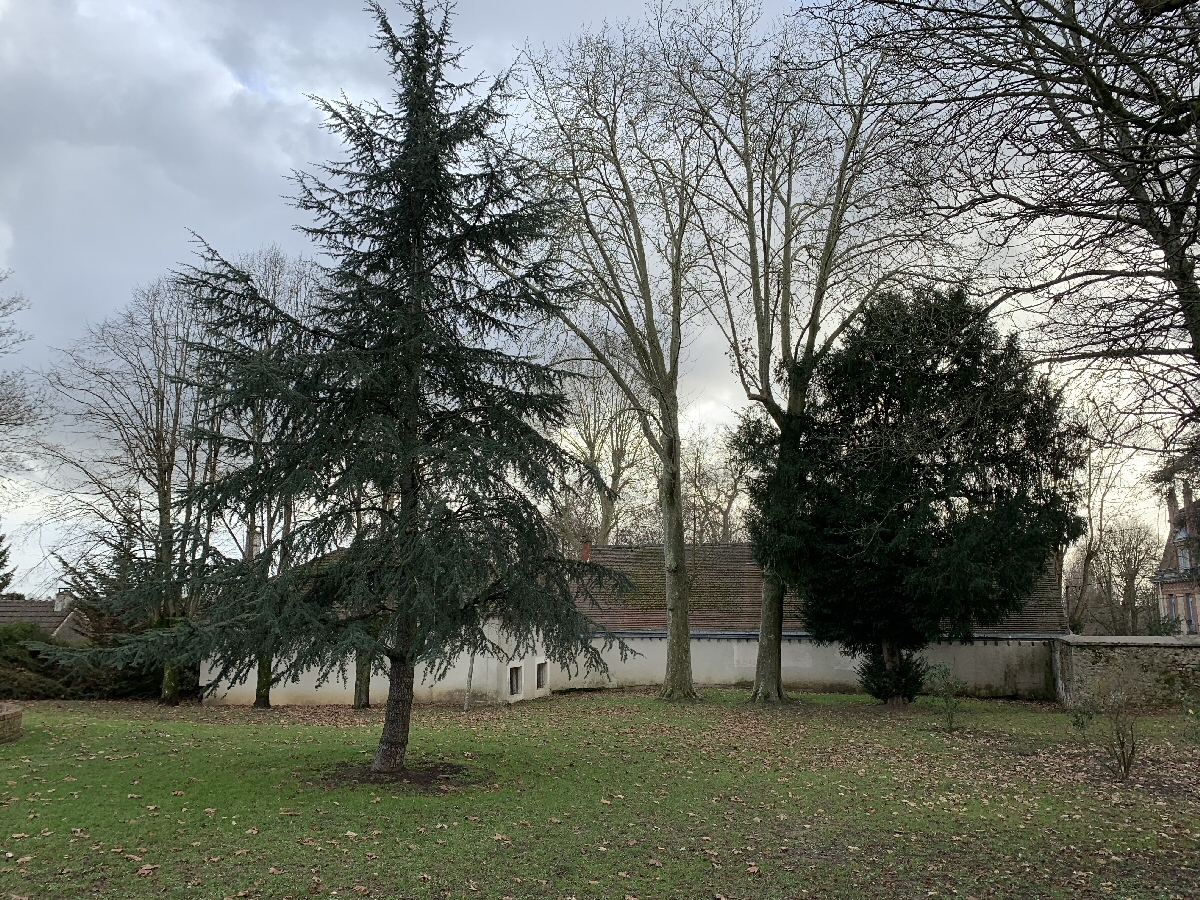
Remains of the Camaldolese convent
(december 2022)
|
But it was at Grosbois that he wrote, in Latin, the first part of the
Confessio peccatoris. But it was at Grosbois that he wrote, in Latin, the first part of the…
"J’y trouve des obscurités qu’on ne peut comprendre qu’en ayant la foi."»
His stay in the convent was quite short, from May 1715 to August 17, 1717, but often interspersed with trips to Versailles or Fontainebleau, where the various pleasures of the court, in addition to hunting, made him "fall back" into sin…
In the
Confessio…, he himself recounts in great detail his complex journey, and the current work of historians shows that there are very few errors to be found in his writings. One of the original features of the
Confessio… is that, throughout its 400 pages, it mixes chronological facts with the reflections and anguish of a Christian struggling with his conscience as a sinner, subjected by God to human passions. He then reveals his conversion to a Christianity close to Jansenism - although he sometimes denies it. Moreover, the Camaldolese Fathers were sympathetic to the ideas of
Port-Royal.
This double presentation in writing leads to the production of a particular style of narrative: sometimes he is addressing to God, sometimes to men, and even to its potential future readers!
"I speak not to men, but to God", and towards the end of the text,
"I owe my readers everything from my past life… I dedicate my pen to you…" Perhaps this is where Rákóczi is aware that he is entering literature.
It is in this perspective that the works of Gabor Tüskés and his colleagues reveal in Ferenc Rákóczi the man of literature. It is a particular genre, presented with different styles, a little like a musical work where different climates would follow one another, then would mix until a final tinted with a prophetic tone.
He develops his thought on several registers: that of the moralist, who knows the heart of the man confronted with his passions; that of the theologian, who analyzes without slackening the nature of God and the problematic of the free-will and the grace; that of the philosopher, who denounces the false pretenses. At times, the style becomes inflamed, perhaps approaching the exaltation of the great mystics.
The Confessio peccatoris, a substantial work
The main title is "Confession of a sinner, who, prostrate before the manger of the newborn Savior, laments in the bitterness of his heart his past life and remembers the graces he has received and the guidance of Providence over him…" The entire text of the Confessio… has as its backdrop a questioning, a conversation with God or Jesus, a permanent prayer and imploration. "O my Jesus, I feel you within myself", these first words refer to Saint Augustine, who is like his model. Rákóczi seems at times to be inhabited, as mystics are, and one finds in his writing the notions of light and illumination. He lives his relationship with God in his flesh, and knows the throes of the great human passions and the torments of his conscience.
Although it is impossible to know his direct relationships with his entourage and daily conversations, one is curious to understand why he felt the need to write such a confession? If Prince Rákóczi, as a public man, exerted a kind of fascination on those close to him, this could not fulfill his true vocation. What better confidant, then, than a writing in Latin?
In many instances, the contrast between the proud Prince and his extreme humility appears. "Your Providence prepared me to go up to a theater, where I was to play the character, not of a Prince leading a private life, but one who governs men… This is the work of your grace upon me. He evokes The abominations of my life; my heart was far from you." One of the original features of this text is that the author makes a close link between the historical accounts and the religious elements, constantly alternating the one with the other, sometimes in the same long sentences: "the miseries of my people were without number and without measure; all that I did well was evil in your eyes…"
From this reading, we can retain some characteristic aspects of Rákóczi's reflections.
Rákóczi the moralist
The sinner is often led to dissect the human passions, which relate to his life as a man; one would think one was reading a treatise on the passions, in the manner of Descartes or Spinoza. "Profane love creeps into my heart; self-love is my other enemy to fight." During a stay in Naples, in front of Vesuvius, he is "sensitive (to the) beauties of the nature (which) can involve the greed which is avid of knowing for the pleasure to know."
Rákóczi the theologian
In his long descriptions of political or military events, and in his strategic arguments, he leads us into long digressions on the secret designs of God. "It is here that the height of your wisdom surpasses all the powers of human intelligence."
He questions the nature of faith and sees the contradictions of different religious practices… "things are as You made them."
"The spirit attaches itself to its God, of whom it is a portion." He tries to analyze the use that one makes of his freedom, before God: he states this Jansenist idea, that "the grace does not come from the freedom of the man. But why can't everyone be saved?" he asks.
He offers us a kind of mystical key: "I must therefore go beyond myself."
He denounces false faith: "we reject flies and aphids, while we swallow camels."
At the end of the confession, Rákóczi writes: "I detest the condemned propositions of Jansenism, I do not deny the freedom of man to do good or evil, nor his cooperation with God in good works. I also recognize that man can resist interior grace. While I hold to the doctrine of St. Augustine and St. Thomas on predestination, I am far from denying freedom and its cooperation. Man by nature tends to evil, but greed presents this evil as good."
Rákóczi the philosopher
In the course of long developments, of an implacable logic, one discovers a kind of Rakoczian dialectic, in the manner of Socrates.
Rákóczi the prophet
"The end of time is undoubtedly near, seeing such a cooling of charity."
Rákóczi the literary
Without encroaching on the field of the specialists, let us recall that Rákóczi already has the reputation of a great reader. He alludes to it in Grosbois. And his library of Rodosto is well supplied. He explains the two ways of reading it, either according to the worldly spirit, or according to the light of the Lord.
Rákóczi the political thinker
"Besides, the Hungarians are not the subjects of their kings, but of their laws. O Princes who read this confession of a sinful Prince, learn therefore not to consult men until after you have consulted God, if you wish to satisfy your first obligation, which is that of a Christian, and then that of your State."
In the solitude of the "desert", writing is for him like a new action; the prayer and the silence of the monastic rule, certainly favored his inspiration. The writing in Latin, the language of his first education comes to testify, on paper, of the revelation that he received in Grosbois. And the prince has a great conscience of the importance of his messages: "I do not write for the worldly, but for the adorers of your providence.
Rákóczi's Confession, a translation
The Confession is the translation from Latin into French by Father Chrysostom Jourdain, Prior of the Camaldolese (1732-c. 1778). He undertook this work long after the death of the prince, in 1735; this shows that Rákóczi's desire had been carefully guarded by the Camaldolese Fathers. The critical analysis of this translation has been detailed by Ildikó Gausz, of the University of Szeged, who emphasizes the translator's concern for clarity, logic, and rigor: "the mastery with which Jourdain handles Rákóczi's popular Latin restores the perfection of this masterpiece that is the Confession."
A treasure in the Municipal Archives: a Prince in Yerres
"I withdrew to my solitude at the Camaldolese, with no other suite than three servants. It was the very day of Saint Augustine" (Wednesday, August 28, 1715 - editor's note).
The municipal archives of Yerres preserve the parish registers, the first act being dated 1622. In spite of some gaps in the 17th century, the Yerres years of Prince Rákóczi are well present. One can easily find on the register
register7, where the prince of Transylvania is mentioned, with all his titles, the names and qualities of his servants.
On the eighteenth day of January
one thousand seven hundred and seventeen was baptized
Françoise Thérèse Chaillou born on the fifteenth
of this month daughter of Jean Chaillou, groom
of his serenissima highness
Lord Francis Ragotzi second of this name
sovereign Prince of Transilvania,
and of Marguerite Dreux (?)
his legitimate wife, the father
of the child being absent, the godfather
is my Lord Francis Ragokzy
sovereign prince of Transilvania
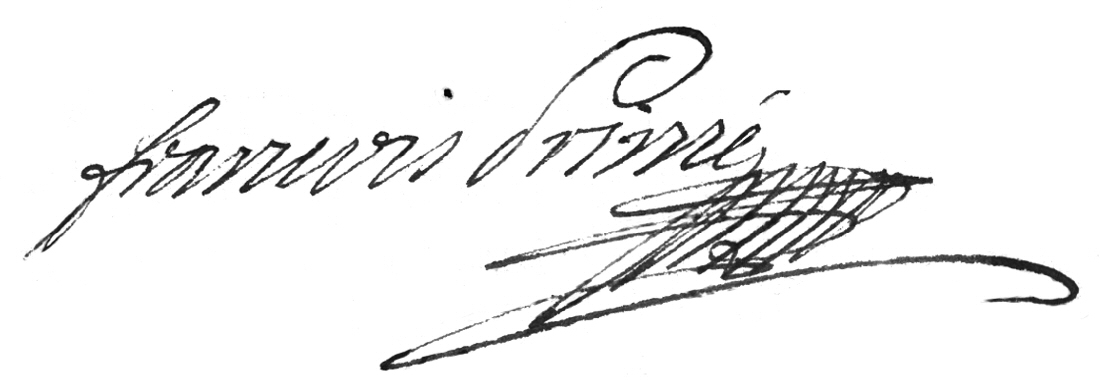
The signatures follow, and that of the Prince:
|
Signature with an elegantparaph8
|
The name of the Prince is still mentioned in the act of January 28, 1717, where is baptized Magdelaine David, daughter of his postilion. The godfather is Jacques Charrière, quoted as Swiss of the prince. Finally, on October 18, 1717, one thousand seven hundred and seventeen, takes place the nuptial blessing of Pierre Dubuisson gardener at the Camaldolese in the house of
Monseigneur the Count of Charosse Francois second of the name Prince ofRagotski9 sovereign of Transylvania. This gardener is undoubtedly not part of the employees of the prince.
The presence in Grosbois of a groom and a postilion at his service confirms that Rákóczi needed to travel by carriage or horse.
The public man, a romantic character
The importance of these events, as well as the strong personality of Rákóczi, contributed to the formation of a romantic myth, from which musicians, writers and filmmakers drew inspiration while accentuating it. Thus, in 1846, Hector Berlioz played his
"March of Rákóczi" ou
"Hungarian March", a variation of an ancient Hungarian lament, for his opera
"The Damnation of Faust". Frantz Liszt adapted it for piano and orchestra.
Abbé Prévost's novel,
Manon Lescaut, published in 1731, features Ferenc Rákóczi, as the
Prince of R in the novel, and the
Hôtel de Transylvanie, a Parisian gambling house frequented by the great lords. The supposed role of the prince, however, is considered an element of fiction. Voltaire portrays Rákóczi in
Candide (1759):
Cunégonde finds refuge with the Prince on the shores of the Sea of Marmara, where he died in 1735.
In the cinema, closer to our time, let's refer to Angélique, marquise of the angels, a "series" of films by Bernard Borderie (1966): in
Angélique et le roy, Angélique is entrusted by Louis XIV to accomplish a mission with the ambassador of Persia. The latter falls in love with the beautiful girl and, faced with her resistance, confines her. The Hungarian prince Rákóczi is then charged to deliver her. The ambassador not giving up, Colbert gets Angélique out of trouble by making her pass for the king's favorite. Always pursued, the prince Rákóczi takes refuge at Angélique's house and does not take long to become her lover, which stirs up the king's jealousy… [according to the information of Internet].
It is true that, apart from his great moral qualities, described by Saint-Simon, Rákóczi was a handsome man, and did not hide from using - and even abusing - his natural seduction!
In Yerres, the presence of Prince Rákóczi has been known since 1936, when the Hungarian Association of Paris wrote to the mayor requesting the erection of a memorial on the site of the Camaldolese convent, where the prince had made a retreat. The request was granted and a stele was made by the Hungarian sculptor
József Csáky and inaugurated on June 12, 1937, near the former entrance to the monastery. In 1978, the more spacious Rákóczi Square was built on the site of the former monks' cells; the stele was replaced there on that occasion. The epitaph reads
"…in memory of Franz II Rákóczi, an ally of Louis XIV and leader of the Hungarian War of Independence 1676-1735, who lived in seclusion in the Camaldolese Monastery from 1715 to 1717."
Rákóczi had lived an eventful life of travel, struggle and exile. Carried by a fierce conviction against the injustice of the world, Yerres brought him a peace that he never forgot:
"I had never enjoyed a softer and quieter life (Letter of August 8, 1715) and
the contentment in which I enjoy in my solitude is worthy of envy since one year that I am there; my taste, far from decreasing, increases; thus, I begin to accommodate myself and remain ready to finish my days there (Letter of October 16, 1716).
.10
A fairy tale
"This holy hermitage where I am now, … my happy and quiet solitude."
In the 1950's and 1960's, we, the present-day Yerrois, knew about the rare remains of the hermitage (or convent) of the Camaldolese, in particular the stele and its inscription. We were intrigued by the story of the heart, enclosed in a golden urn. Where was the heart of Rákóczi, which is the source of many stories… Will we ever know?
Isn't the most moving thing - once again in writing - the testimony of his presence by the signature "François Prince" on the parish register of Yerres?
In conclusion… a message from the Prince
"Listen Princes and Peoples of the earth: the Lord has called me from my mother's womb, not to establish me as a prophet, doctor, or reformer, but as an example of his justice in my lowliness and of his mercy in my preservation and humiliation.
Let me therefore be permitted to raise my voice from the solitude, or rather the dark den of my pilgrimage, and to speak to my children in the outpouring of my heart and the candor of my soul, since I have only this one occasion left where I can and must remember that I am a father. I am undertaking a work that is suitable in every sense, and indeed in keeping with my vocation, but I am going to deal with a subject that offends greed…"
This excerpt is the beginning of the prologue of a manuscript that Rákóczi wrote in Latin, and translated himself into French: it is the
Treatise onPower11, in which he analyzes the power of right reason, then the power of charity. In his path, as in his political message, do we not find the delicate search between action and wisdom? The presence of Prince Rákóczi among the Camaldolese monks reveals the Christian that he was, a man of high spiritual value. Was his work inspired by God, this question remains for the Bible? The Christian Prince gives his answer:
"From You I get what I write.""
For us, readers of the XXIst century, his writing, with several dimensions, seems to touch the timeless. The reading, sometimes arduous, of the
Confession… will not leave indifferent the amateur and the researcher, patient and curious: they will find there unsuspected richness, and a style, an atmosphere that only, the intimacy of the reader with his text, is able to make discover and appreciate. This edition is an essential aid to this.
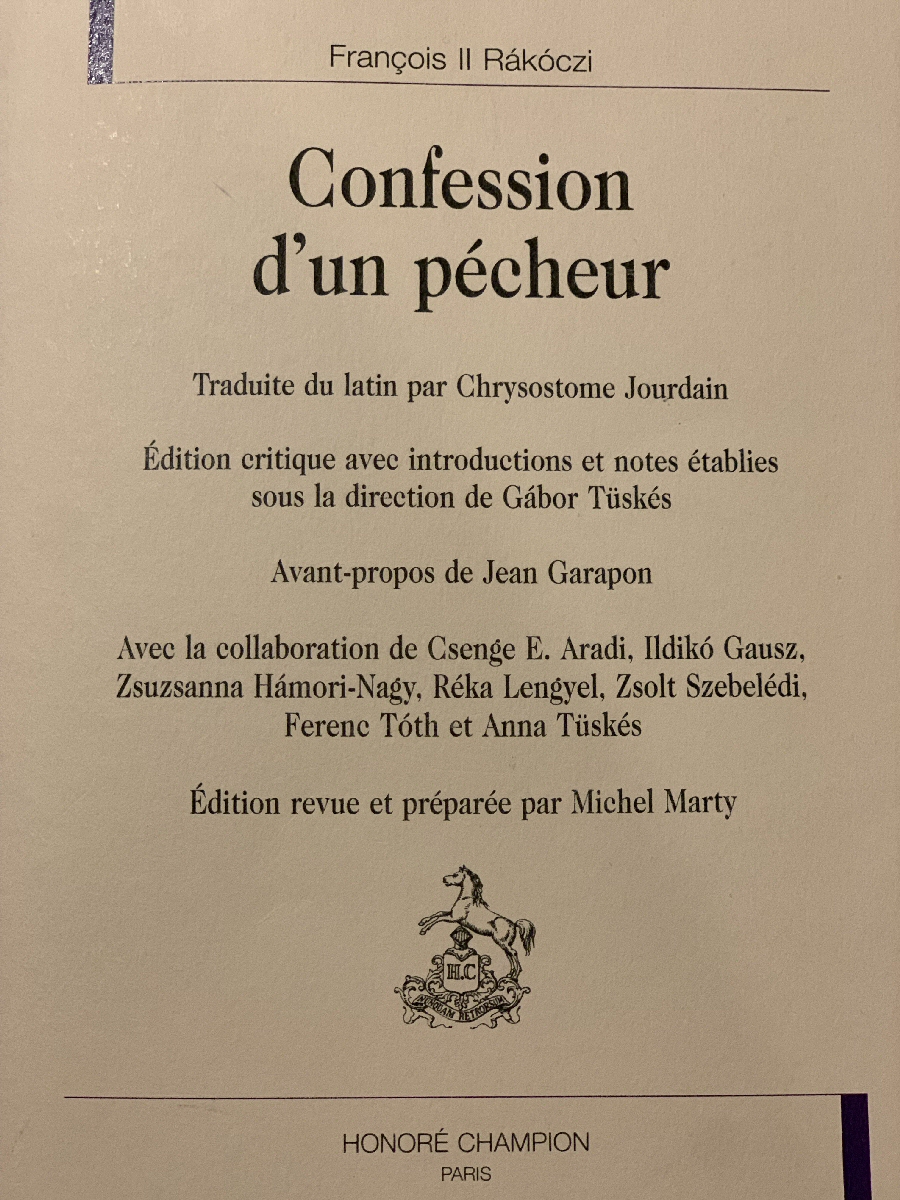
| Cover of the critical edition:
Ferenc II Rákóczi, Confession of a Sinner
Éd. Honoré Champion, Paris 2020
|
The last word goes to Gabor Tüskés:
"The critical edition of the Latin and French texts will contribute to a renewed international interest in research on Rákóczi. A detailed analysis will not fail to bring many surprises in several disciplines."
|
Thanks to André Bourachot
|
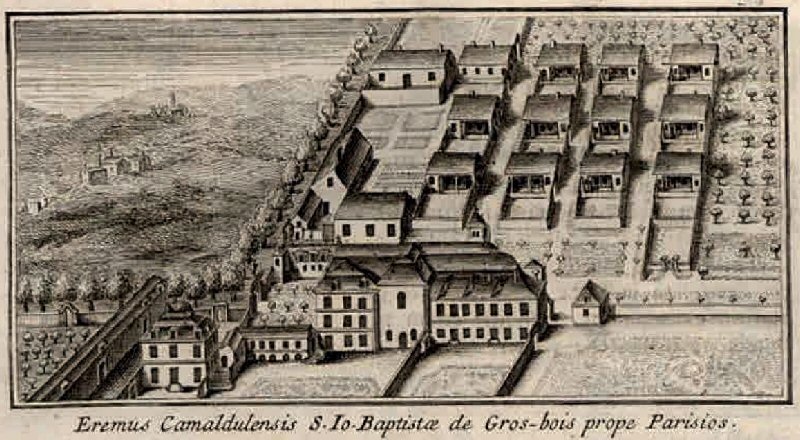
The Camaldolese convent in Grosbois (1642)
|
References:
1. Yerres, today a commune of the Essonne; former parish of the Brie, in the Paris region, where the convent of the
Camaldules de Grosbois was located since 1642.
3. Gabor Tüskés is Director of Research at the Institute of Literary Studies, Research Center for the Humanities, Budapest.
4. Confession d’un pécheur, [Confession of a Sinner], Critical edition by Gabor Tüskés, with the collaboration of Michel Marty and Jean Garapon.Hereinafter refered to as La Confession... (Editions Honoré Champion, Paris – 2020)
6. Lucia Laporte, [Yerres, The Camaldolese in the heart of history] - 2010..
7. Class number E 3 of the Municipal Archives of Yerres.
8. The signature, inscribed by Rákóczi in superimposition of the text, was diverted by the service Communication of Yerres.
9. The name of the prince has several spellings, perhaps because of the imprecise pronunciation of his name; the denomination
"Count of Charosse", in memory of Sarros, the family estate, was intended to preserve the incognito desired by Rákóczi himself.
11. Traité de la puissance de la charité[Treatise on the power of charity] - 7th booklet (Prologue) Médiathèque de Troyes (class number Ms 2147).